
Close your eyes for a moment and recall your earliest musical memory. Perhaps it’s your mother’s lullaby, a song playing at a first dance, or the anthem that got you through your teenage years. Now notice something: that memory isn’t just visual or emotional—it’s sonic. The music itself is woven into how we encode and recall our most important moments.
When dreams and sounds collide
The Memory-Sound Connection
Scientists have long studied why music creates such powerful memories. The answer lies in how our brains process both. Music activates the hippocampus—our brain’s memory center—while simultaneously triggering emotional responses in the amygdala. This double activation creates memories that are both vivid and deeply felt, unlike memories encoded through other means.
This explains why a particular song can instantly transport you back decades. You hear the opening bars of a song from high school, and suddenly you’re seventeen again, standing in a gymnasium or cruising down a familiar road. The music serves as a time machine, bypassing our normal memory decay to access moments we thought were lost.
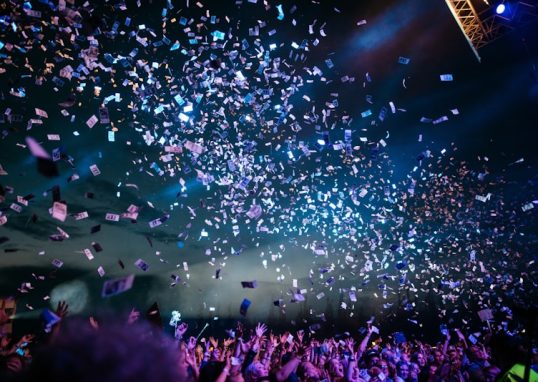
The pulse of music moves through us
Personal Soundtracks
Each of us develops our own musical autobiography—a collection of songs that mark the chapters of our lives. These soundtracks aren’t random; they’re deeply personal. The song playing when you had your first kiss matters more than its chart position. The album you listened to during your first heartbreak transcends its sonic qualities to become a healing artifact.
Researchers call this “the reminiscence bump”—our tendency to most frequently recall songs from our adolescence and early adulthood. These are the years when music first shaped our identity, when we first discovered who we were through the songs we loved. Those early musical choices weren’t just preferences; they were declarations of who we wanted to become.
The Soundtrack Hypothesis
What if you could deliberately construct your life’s soundtrack? Not by controlling every song that plays, but by being intentional about which music marks which moments. Some people do this instinctively—choosing songs for graduation parties, wedding first dances, or morning routines. But the deeper practice is noticing which moments naturally attract which sounds.
When a song seems to perfectly capture a feeling you can’t otherwise express, pay attention. That alignment isn’t coincidence; it’s your psyche’s way of processing experience through the vocabulary of sound. The songs that move us most are the ones that articulate what we couldn’t say ourselves.
Creating New Soundtracks
Here’s a practice: next time you experience something significant—a breakthrough at work, a moment of clarity, a turning point—immediately play a specific song. Repeat that song during similar states. Over time, you’ll create conditioned responses between musical and emotional experiences. Music becomes not just a mirror of our lives but a guide for them.
“Where words leave off, music begins.” — Heinrich Heine
What song perfectly captures a moment in your life? Share your soundtrack memories below! 🎵

相关文章


Analog Souls: Why Musicians Are Returning to Tape, Tubes, and Vintage Gear
There’s somethin...
读出全部
The Festival Generation: How Live Music Events Became Cultural Pilgrimages
I’ll never forge...
读出全部
Beyond the Song: How Music Videos Became the Ultimate Art Form of Our Time
I still remember the f...
读出全部
Neon Nights: Electronic Music’s Journey from Underground to Mainstream
I still remember my fi...
读出全部